Physical systems
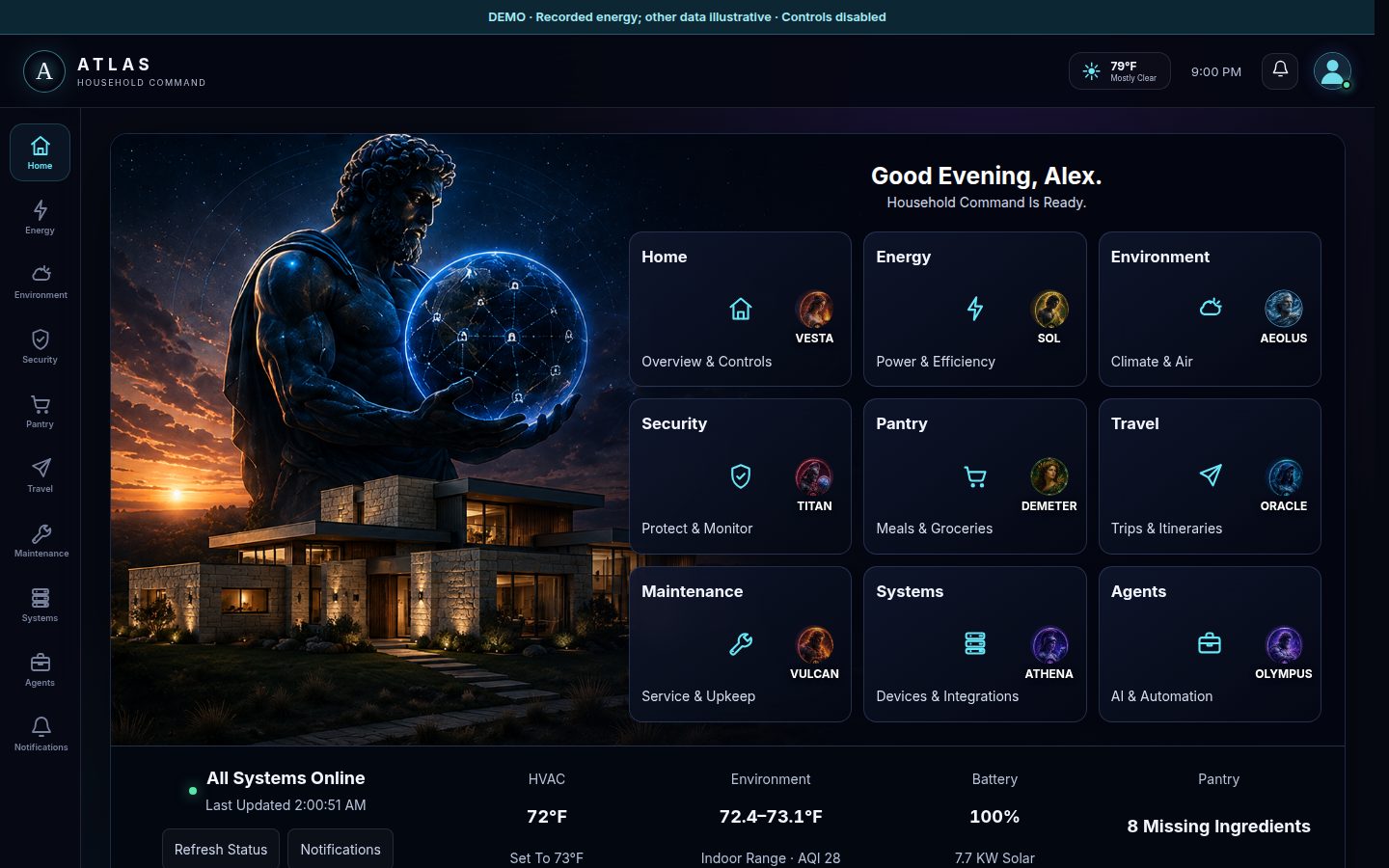
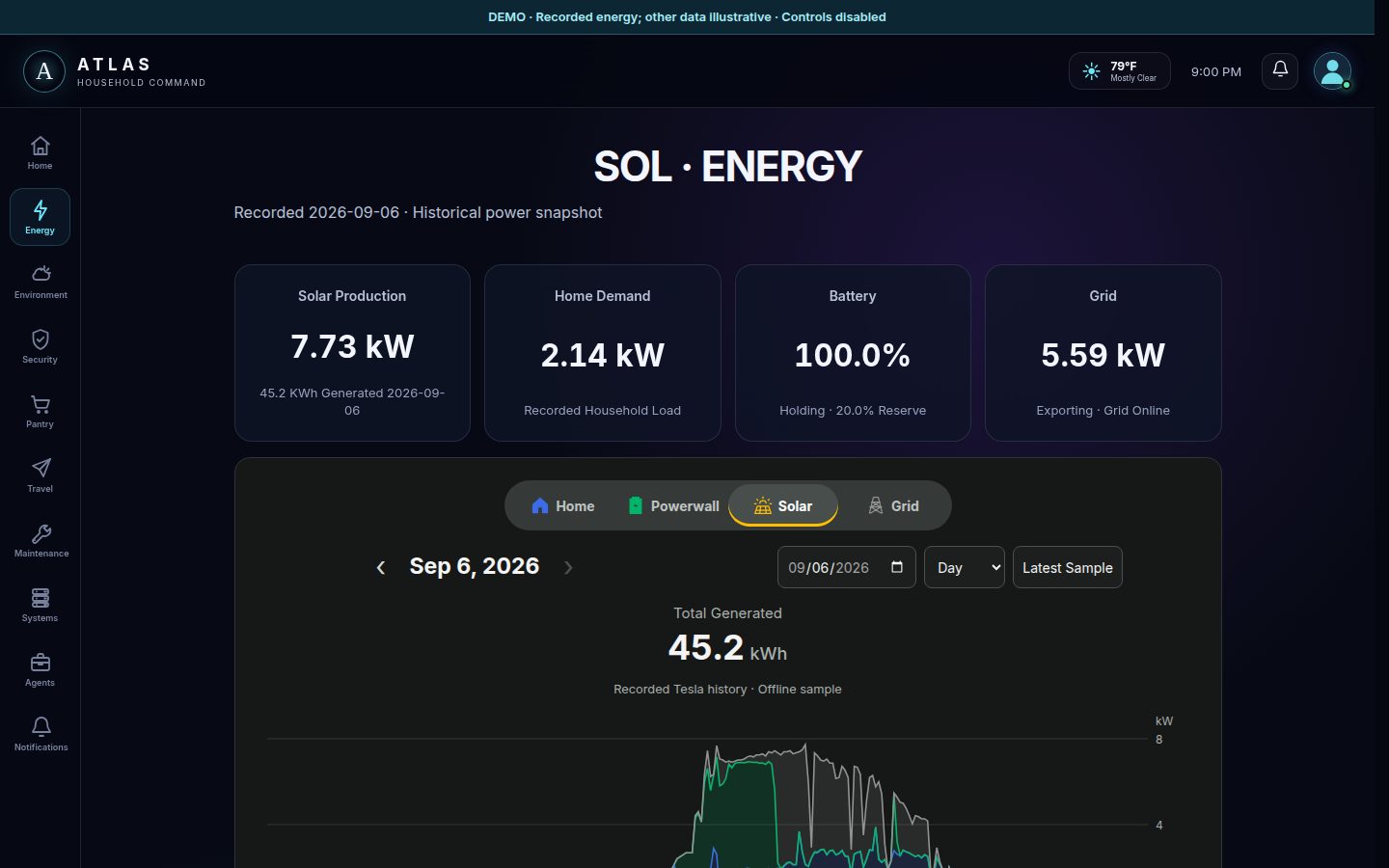
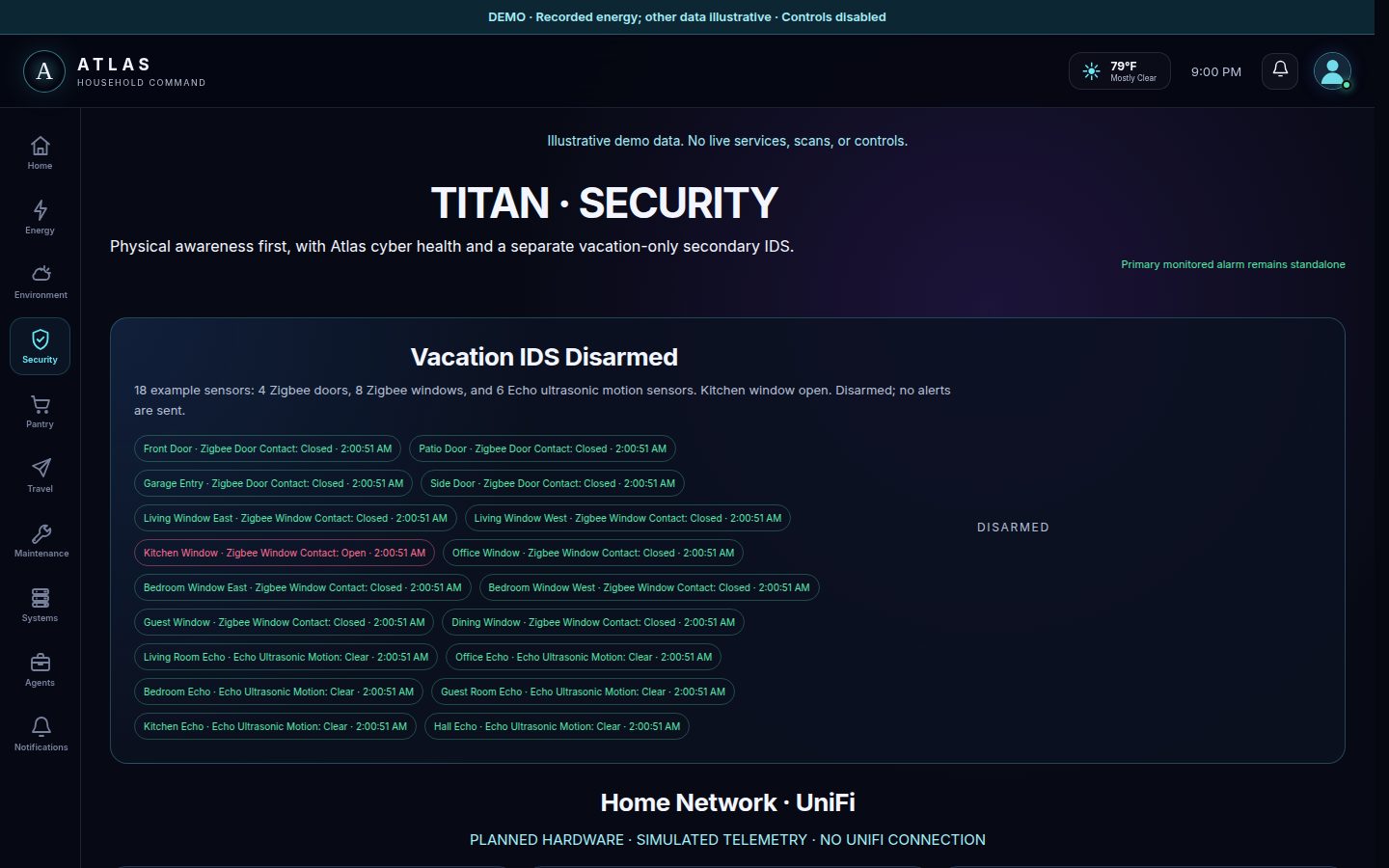
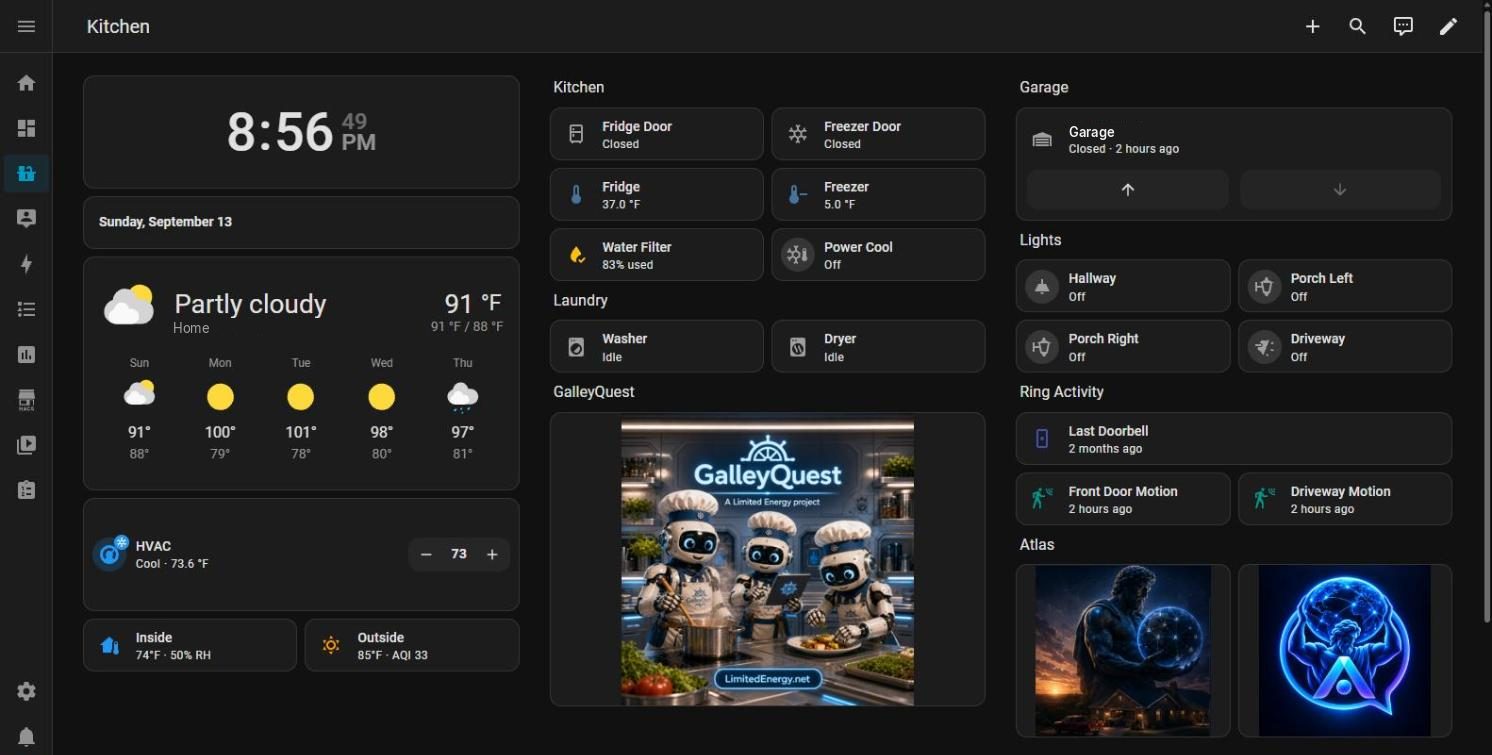
Energy and battery visibility, climate and air quality, lighting controls, garage and appliance state, and camera views connect the interface to the physical home.
Personal systems engineering · Actively developed · A Limited Energy project
A locally operated platform that gives a home one private place to see what is happening, act safely, and stay ahead of the ordinary work of running a house.
Atlas runs on hardware in the home. It builds on Home Assistant for device telemetry and bounded controls, and includes Hermes, a local AI assistant that answers from real device state and reports what actually happened. No cloud AI is required.
The engineering problem
A thermostat app, a garage app, a camera app, a robot vacuum app, a grocery app, and a stack of reminders. None of them know about each other, and several of them report household activity to a vendor cloud.
Atlas applies building-systems thinking to a home, at household scale and on household terms: integrate the systems, make the state understandable, bound the actions, and plan for recovery. It is the engineering system I wish I had at home, built the way I build them at work: do the task first, then engineer the workflow around what it actually requires.
What Atlas does today
Energy and battery visibility, climate and air quality, lighting controls, garage and appliance state, and camera views connect the interface to the physical home.
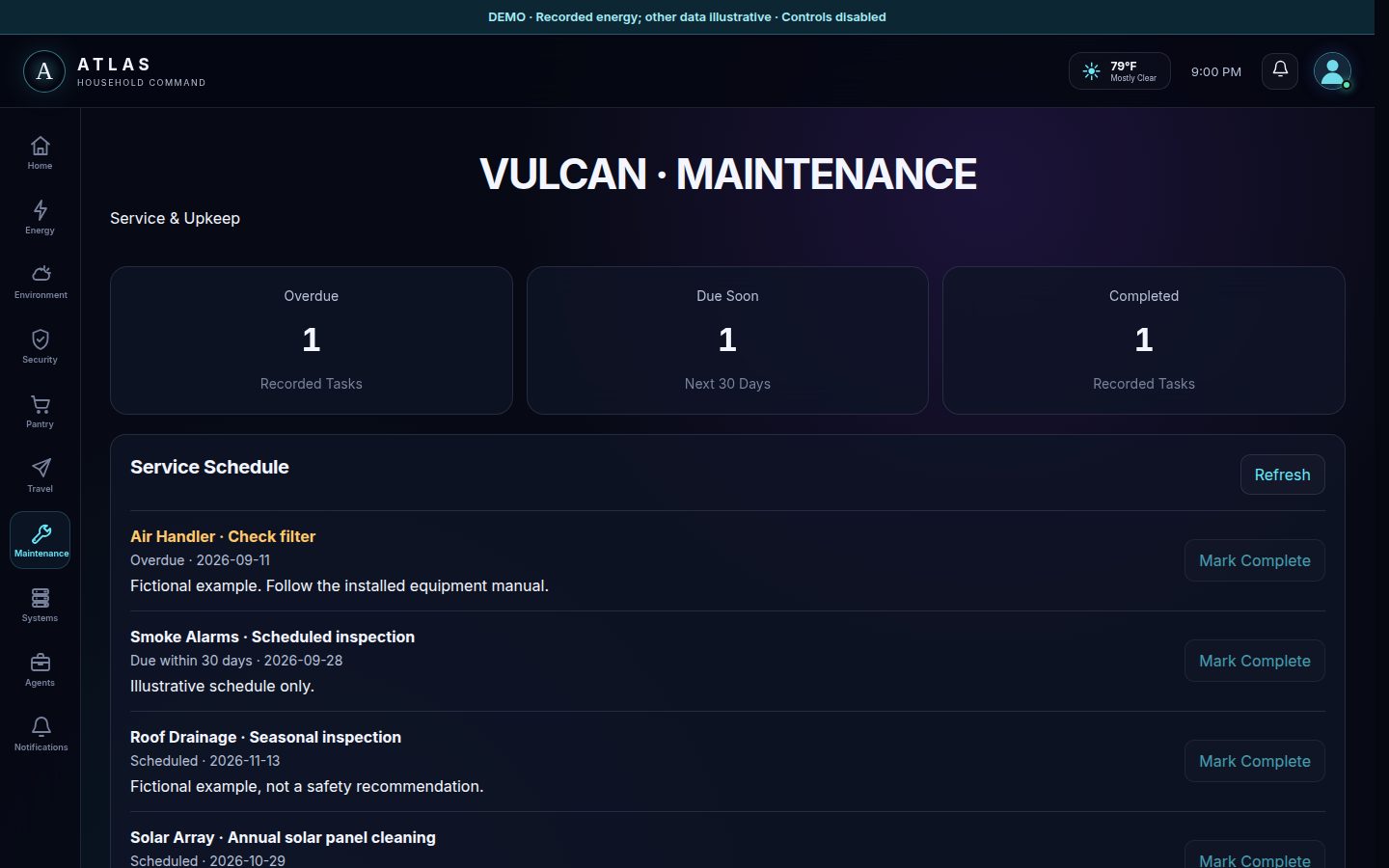
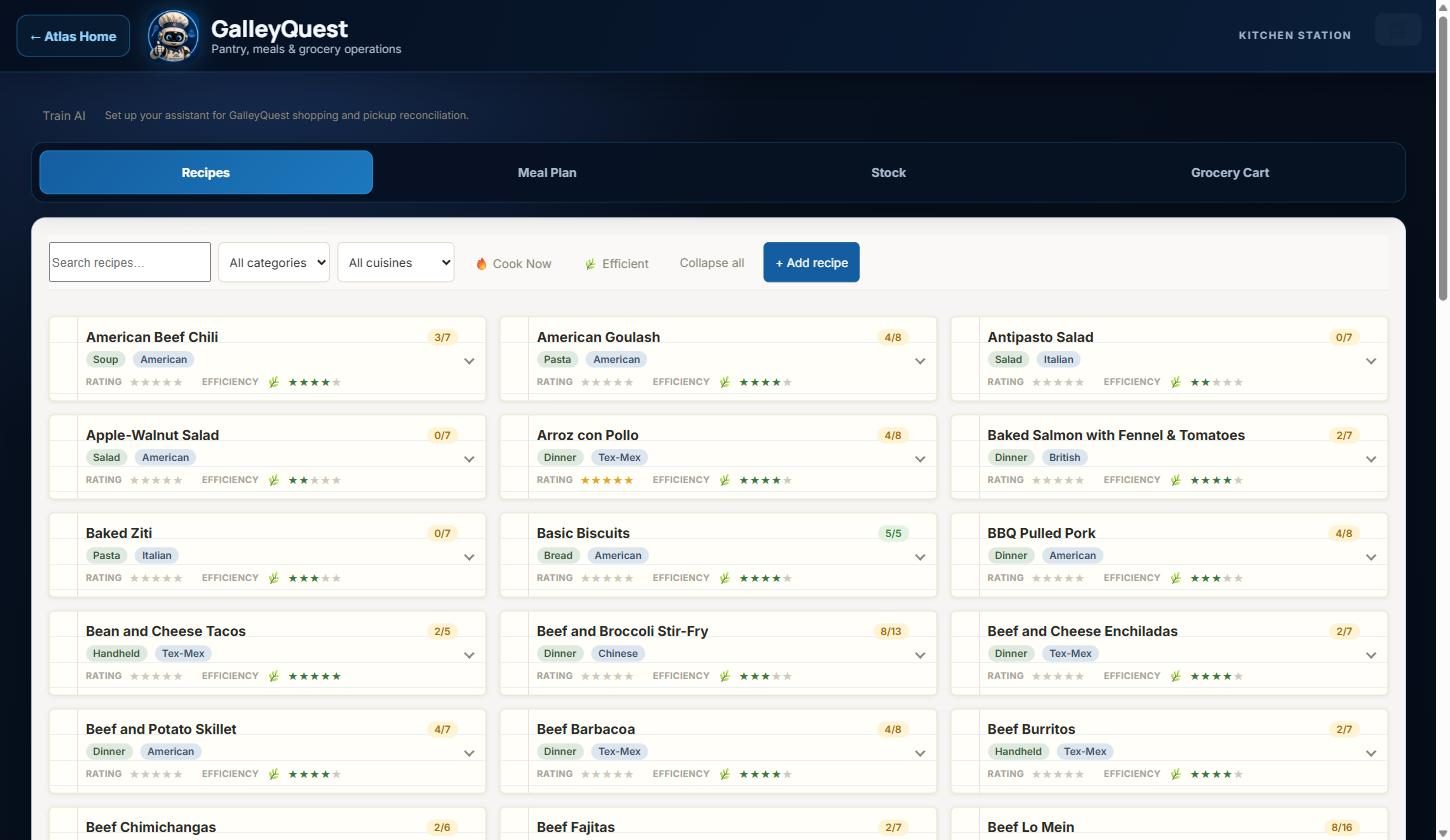
GalleyQuest handles pantry, meals, and groceries across multiple stores. Travel has its own workspace. Maintenance tracks service dates and recurring upkeep.
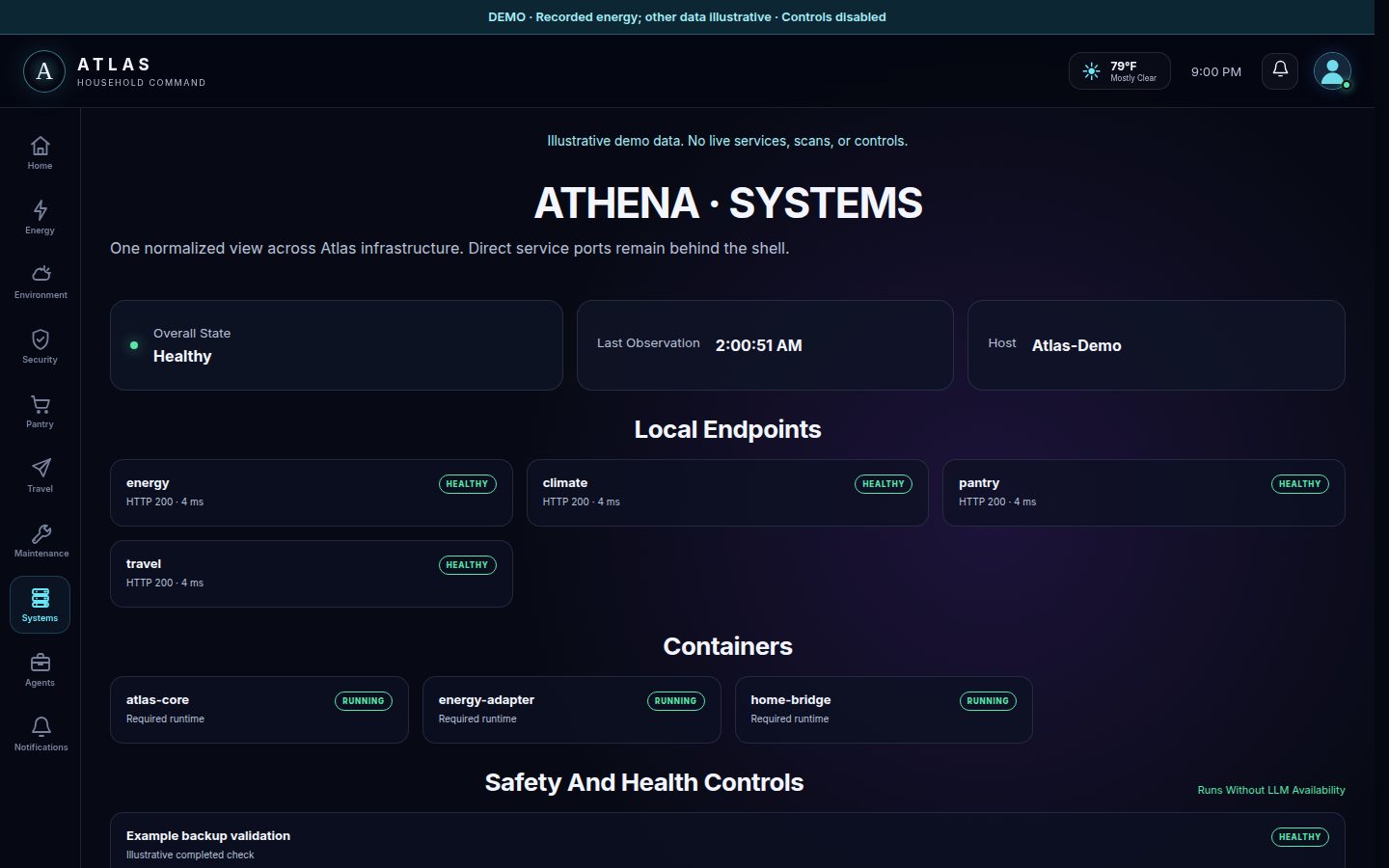
Systems shows service health, containers, and integrations. Agents is where Hermes lives. Notifications gathers what needs attention, routed out through Home Assistant.
Hermes
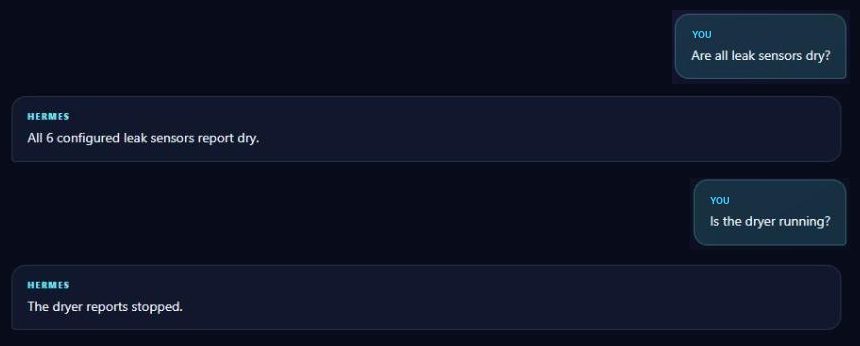
Hermes is the assistant inside Atlas. It runs open-weight models locally through Ollama, answers from current device state rather than guesses, and takes only a defined set of bounded actions. Every action is reported as done, already done, could not confirm, or not permitted. When something is outside its scope, it says so.
Running locally keeps prompts and answers on household hardware. It does not by itself make the system secure, and it does not make answers correct. Atlas addresses correctness by grounding answers in real state and confirming actions after they run, and addresses safety by limiting what Hermes is allowed to do.
Workspaces
Each workspace is named for a figure from Greek or Roman tradition that matches its job. The names are labels, not characters, and not claims of independent autonomous agents. They give the interface a consistent vocabulary and a small educational thread for the household. Atlas holds the whole; Hermes carries messages and answers; the rest are rooms.
| Workspace | Name | Role |
|---|---|---|
| Home | Vesta | Household overview, module navigation, shared climate controls |
| Energy | Sol | Solar, battery, home, and grid views with directional energy flows |
| Environment | Aeolus | Indoor temperature, humidity, air quality, configured weather sources |
| Security | Titan | Evidence freshness, cyber observations, explicitly configured presence monitoring |
| Pantry | Demeter | Pantry summaries and meal planning through GalleyQuest |
| Travel | Oracle | Itineraries, verification evidence, cost tracking |
| Maintenance | Vulcan | User-entered service dates, upcoming tasks, completion history |
| Systems | Athena | Configured services, device inventory, integration status |
| Agents | Olympus | Hermes chat and budget-gated multi-provider review |
Boundaries, drawn on purpose
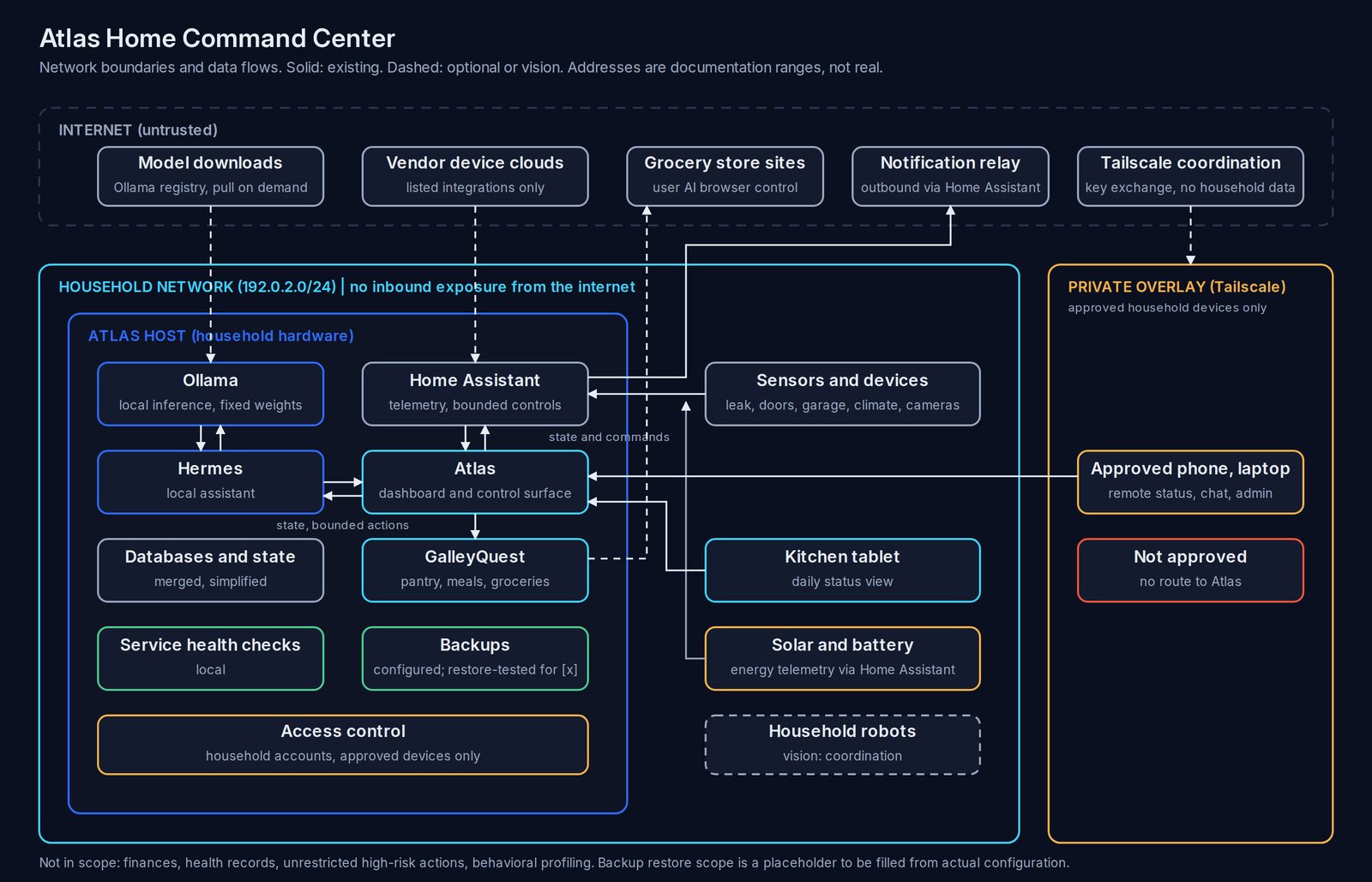
Inference runs locally; household data does not leave the house for AI features. The household network has no inbound exposure from the internet. Approved household devices reach Atlas remotely through a private overlay network; a device that is not approved has no route. Administrative interfaces bind to loopback only. Service health checks and backups run locally.
Some device integrations depend on their vendor cloud. Those paths are drawn in the diagram rather than hidden.
Scope
Atlas serves one household and is actively developed. It is published to show the architecture and the boundaries, not as a packaged product. It succeeds Jarvis 5000, which is retired.
Connected project · GalleyQuest on GitHub
Pantry, meals, and groceries that actually do something.
GalleyQuest connects pantry inventory, recipes, meal planning, grocery preparation across multiple stores, and pickup reconciliation. It keeps its own name and personality on purpose, and matches Atlas in design and integration. Grocery ordering uses your own AI subscription's browser control (ChatGPT or Claude); there is no per-use API billing, and no subscription is needed for pantry, recipes, or meal planning. Checkout remains a human decision.
What this demonstrates
The engineering work includes system integration, network boundaries, data organization, interface design, reusable AI instructions, and operational checks. A useful system has to account for incomplete inputs, unavailable services, and the consequences of an action.
Next: a published list of every bounded action Hermes may take, a published list of every outbound connection by integration, and automations that adjust within stated limits. None of those are built yet, and they stay under roadmap until they are.
The 10 Rules of AI Engagement set the expectations for evidence, authority, privacy, and recovery in this work.