Make expertise repeatable
Develop reusable engineering and QA workflows by doing the task, refining the output, identifying missing requirements, and documenting the method for others.
Shawn C. Tovey, RCDD
25 years in the field, office, and design process. Turned into practical AI workflows, repeatable methods, and tools other people can use.
My starting point is the work itself: understand what the field needs, build the process, check the result, and make it teachable.
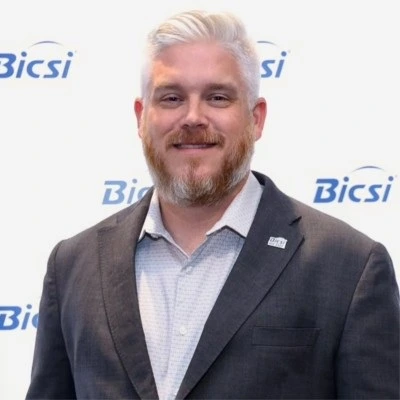
I have installed the devices, answered the service calls, converted the programming data, built the estimates, and developed the designs. That experience helps me recognize the requirements, exceptions, and downstream consequences an automation has to handle.
I use AI to capture that practical knowledge in repeatable workflows. Engineers direct the process, review exceptions, and validate the result.
Engineering innovation
Develop reusable engineering and QA workflows by doing the task, refining the output, identifying missing requirements, and documenting the method for others.
Automated roughly 90% of repetitive conversion work in selected engineering-to-programming data workflows, shifting skilled effort toward direction and validation.
A task-specific estimate from my experience, not a claim of 90% overall labor or cost savings.
Named an AI Champion. Presented practical AI applications company-wide, trained colleagues, and developed reusable prompts for QA teams.
Built from real design problems
Power Load EXaminer for telecom and equipment room coordination.
Job costing and proposal preparation for limited energy work.
Preliminary coordination tools. Review assumptions and results before relying on them.
Personal systems engineering
The same engineering mindset, applied to everyday life.
One private command center for the house, running on hardware at home. Nine domains each have their own agent: Vesta for home, Sol for energy, Aeolus for climate, Titan for security, Demeter for the pantry, Oracle for travel, Argo for vehicles, Vulcan for maintenance, and Daedalus for systems. Hermes, a local AI assistant, answers from real device state. Local models, no cloud spend. Oracle’s itinerary sync is live. It replaces JARVIS-5000, which is retired.
A bot staff of assistants works alongside it: Grok Bot, Chief of Staff, Atlas Prime, Medical Chief, and LegalBot. The Operator is The Human IN the Loop: nothing is sent, bought, or booked without an explicit yes.
Explore Atlas →Veteran advocacy
I'm a U.S. Navy veteran. These projects collect the government's own records, audits, and rulings so veterans and their families can use them.
Current projects cover missing water records at Diego Garcia, the VA's secret waitlists and denial of care, and PFAS firefighting foam. Each one is sourced and links to where veterans can get help.
Explore Veteran Advocacy →The 10 Rules of AI Engagement
Protect human agency. Ground claims in evidence. Improve life through trustworthy intelligence, thoughtful automation, and mutual benefit.
These are the operating instructions I use to direct AI-assisted work, including how to act, when to pause, and how to report uncertainty. Written rules still require verification in practice.
Read the full framework →Professional inquiries, tool feedback, and industry conversation are welcome.
This site uses Google Analytics and external fonts. Contact form submissions are processed by Netlify. Please keep confidential project or client information out of your message.
Limited Energy operates a two-way business text line. Customers and prospective customers receive the number directly when they contact us by phone or email, or when we follow up on an inquiry.
By texting our business text line, you consent to receive one-to-one replies from Limited Energy concerning your inquiry, scheduling, appointment reminders, call follow-ups, and requested updates. Message frequency varies. Message and data rates may apply. Reply STOP to opt out or HELP for help. Consent is not a condition of purchase.
Independent consulting for AI-enabled design workflows and smart automation. PLEX and The Estimator are free tools built from real design problems.
Shawn C. Tovey holds the RCDD credential from BICSI. Limited Energy is not a licensed engineering firm and does not offer professional engineering (PE) services. All work is ICT design consulting and AI tooling. The views, tools, and content on this site are personal and independent. They do not represent the positions, products, or work product of any current or former employer. No warranty is expressed or implied regarding the accuracy, completeness, or fitness for purpose of any tool, calculation, or specification language presented here. All output is provided for preliminary coordination only and must be reviewed and stamped by a qualified professional of record before construction use. No liability is accepted for errors, omissions, or downstream use.